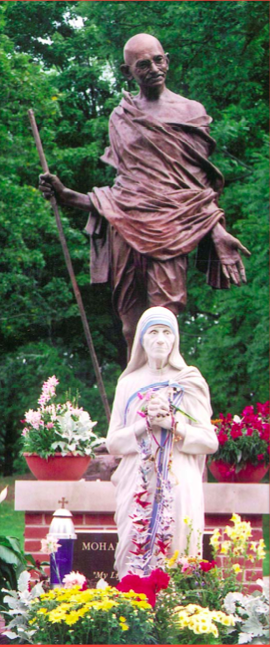
Mahatma Gandhi and Mother Teresa are two of the great personalities known worldwide for their respective outstanding principles – non-violence and peace. Both devoted their lives for the betterment of humanity by helping people who were in greatest need. People all over the world are inspired by their philosophy of life and strive to follow in their footsteps of compassion, service and love.

 *
*

MISSION STATEMENT
 The mission of the Peace Abbey Foundation is to create and install public works of art that promote peace and nonviolence; and to administer and care for Abbey Interfaith Peace Chaplaincy, The Pacifist Memorial, The Animal Rights Memorial, Abbey Cremation Cemetery for Conscientious Objectors and the National Registry for Conscientious Objection. Throughout the year, the Foundation presents the Int’l Courage of Conscience Award at conferences and peace ceremonies and extends the impact of the Peace Seeds interfaith prayers for peace through their dissemination worldwide.
We conduct and support programs that bring together and promote the cooperation of people of different faith traditions and non-theists as well. We do this in the spirit of the 1986 International Day of Prayer for World Peace, as celebrated that year by religious leaders from around the globe in Assisi, Italy.

The Foundation supports grassroots efforts to link the many dimensions of the peace movement with a committed emphasis on human rights and animal rights. We recognize these two dimensions of intrinsic rights as inextricably interconnected, just as social and economic justice require environmental sustainability and deep respect for the biosphere. Central to our universalist approach is the premise that nonviolence is the most effective and long-term strategy in addressing the multitude of challenges that now threaten our increasingly imperiled planet.
FOUNDATION GOALS
- To Educate: We conduct and sponsor programs and projects that promote a deeper understanding of the importance of service as a way of life. We exemplify this commitment to altruism through our decades-long affiliation with The Life Experience School for young adults with disabilities.
- To link: We conduct and sponsor public events that promote understanding and mutual respect between people of different faith traditions and non-believers. We celebrate examples of artistic expression that elevate the ideals of compassion, cooperation, fairness and peace.
- To Beautify: We commission and install works of art that express the sacredness of life and the power of pacifism and nonviolence. Accordingly, we support efforts that employ the arts in fostering social justice and peace.
- To Participate: We conduct and support programs and projects that further an understanding of the many applications of Gandhian nonviolence and civil disobedience. Accordingly, we initiate, support and participate in peace and justice demonstrations and protests.
PEACE ABBEY DONATION AND FUNDRAISING POLICY STATEMENT
Guided by conscience, compassion, and service, the Peace Abbey does not engage in active fundraising appeals or solicitations. We allow people to offer without being asked.More importantly, this policy reflects our commitment to refrain from competing with local, state and national organizations and causes embraced by the Peace Abbey, and our firm belief that directing resources to other grassroots organizations whose missions align with our own is, in essence, a valid way of supporting us.While this may limit our ability to fund our own programs and projects locally, nationally, and internationally, we accept this as an expression of our values and a tribute to those we honor and in whose footsteps we walk.We are deeply grateful to all who wish to support our mission and encourage that such generosity be directed first to small, local grassroots organizations whose missions the Peace Abbey endorses and embraces. If, after supporting these organizations, resources remain to share, we are sincerely appreciative of donations that help sustain the ongoing peace and social justice work of the Peace Abbey.
To those who offer to support our work, we can’t thank you enough. While this policy suggests that we are endowed and don’t need financial support, nothing could be further from the truth, But the greatest truth we hold is following our conscience which guides us away from fundraising. To a sensible person, this might seem ill-advised or even foolish. What unfolds over time will prove whether or not that is true. Until then we will continue our work
-
THE PEACE ABBEY & THE QUESTION OF CHARITY
- Whose Money Is It, Anyway?
- I have often been asked why the Peace Abbey doesn’t fundraise. It’s a fair question, especially now that the Abbey is facing greater financial uncertainty. So I thought I would explain in greater detail what is behind that decision and why, after all these years, we have been reluctant to follow the traditional path of fundraising.That doesn’t mean we are opposed to fundraising.The Peace Abbey has served as a fiscal sponsor for several small local organizations and projects that actively raise money. In those cases, the Abbey provides the financial and administrative structure that allows these groups to receive and manage charitable contributions. While we have chosen not to actively fundraise for ourselves, we have helped other organizations raise and administer money for work we believe in.For example, we have supported Together We Can, which assists families in the Plymouth area who have been impacted by ICE deportation. We have also supported the Friendship Garden on Cape Cod, a community garden created and overseen by a member of the Quaker community that provides organically grown vegetables to people experiencing food insecurity.We also served as fiscal sponsor for the Stop & Shop Gift Card Project, organized under the care of two Quaker activists. Contributions were received through the Peace Abbey and used to purchase thousands of dollars in Stop & Shop gift cards for people in need. The cards could be used not only to buy food, but also for gasoline, which was especially important for people who were living in their cars.And we have helped an Amnesty International Prisoner of Conscience and Peace Abbey Courage of Conscience Award recipient develop a documentary film project in Tibet. This is the third film the Peace Abbey has assisted with.This kind of outreach to small groups doing peace and social justice work is not new. For many decades, through many wars and many economic crises, community groups have turned to the Peace Abbey when they needed a fiscal sponsor for contributions they had raised themselves. These groups often had the people, the ideas, and the commitment to do the work, but they needed an established nonprofit to receive and administer the funds. The Peace Abbey has been able to provide that support.There is a common thread running through these efforts. The Peace Abbey has long been aligned with and inspired by the Quaker Peace Testimony—the belief that peace is not simply the absence of war, but a way of living that calls us to oppose violence, seek justice, care for one another, and find peaceful responses to human suffering. Supporting these kinds of community efforts is one way we have tried to put those values into practice.These are the kinds of efforts we are willing to support because they reflect the values and mission of the Peace Abbey. In these cases, we are not raising money for ourselves. We are helping create a way for others to receive the support they need to do work that we believe matters.We have never wanted to compete with local charities for limited financial resources. We have always felt that their mission was also our mission. If someone gave money to help feed the hungry, house the homeless, support children, or protect the environment, we felt they were also supporting the values we believe in.We have considered grant writing and have found reasons why we could justify doing it. But we haven’t pursued it. Maybe we should have. Maybe we still will. But there is a question behind that decision that has continued to bother us:Where did the money come from before it became charitable money? Or, more simply: Whose money is it, anyway? That question is really at the heart of our concern.Charity is almost always seen as a good thing. And it is. When someone is hungry, feeding them is good. When someone has no home, providing shelter is necessary. When a child needs an education, helping that child is something we should all care about. When a community is suffering, helping it recover should be a priority. We should never lose sight of that.But we also need to ask why so many people need charity in the first place. We live in a society where enormous wealth exists alongside poverty and homelessness, and where people can work full-time and still struggle to afford the basics. At the same time, corporations and wealthy individuals give large amounts of money to charitable causes.Those gifts can do real good. But we think it is fair to ask how that wealth was created before it was given away. Again, whose money is it, anyway?Under capitalism, wealth becomes concentrated in the hands of relatively few people while workers often receive far less than the value of what their labor produces. Corporations can accumulate enormous profits while many people struggle to afford housing, health care, education, and other basic needs.
Then some of that wealth is given back through corporate foundations and charitable organizations.
The growing number of billionaires, the growing number of people who are homeless or unemployed, and the growing amount of corporate charitable giving deserve to be looked at together. They go hand in hand.
This is not an attack on every wealthy person or every corporation. Nor is it a criticism of the people who work for corporate foundations. Much of the work they do is valuable and necessary. The question is about the system.
How was the wealth created? Who created it? Who benefited from it? And why does our society depend on charity to address problems that are connected to, and often directly caused by, the way wealth is produced and distributed?
We shouldn’t only ask how much money is given away. We should also ask where that money came from before it was given away. Was some of that money money that should have gone toward fairer wages for the workers who created it?
It is hard to look at the enormous profits of corporations, the wages paid to their workers, and the charitable gifts that follow and not ask that question.
When wealth created within an unequal system is later given away as charity, something deserves our attention. Charity can become a kind of “philanthropic cover-up,” allowing the consequences of exploitation and inequality to look like generosity and compassion.
That doesn’t mean the generosity is meaningless. The food still feeds someone. The shelter still gives someone a place to sleep. The money still helps. But we believe we have to look deeper.
The Peace Abbey has tried to live according to a simple principle: The more you give without being asked, the more you will receive without asking. It’s a beautiful idea, but it is also a risky way for a small nonprofit to operate.
For years, we have chosen not to make fundraising part of our work. We haven’t wanted to spend our time asking people for money or competing with other organizations for charitable dollars. And it’s not as though we were playing hard to get.
We simply chose to operate our nonprofit in a way that reflected the principles we believe in. That is not to say fundraising for other nonprofits isn’t honorable. It is. Many organizations do essential work and need financial support to continue doing it. For us, it has been about finding a way to operate within a capitalist system while remaining true to the values we have chosen to live by. That choice has consequences.
We are financially vulnerable. We know it. We may soon reach a financial wall. We may need to find a visionary benefactor. We may need to reconsider fundraising. Or we may eventually have to close some of the programs and projects to which we have devoted so many years. That possibility is real.
There is no family trust, foundation, or wealthy person waiting in the wings to rescue us. And our history has not exactly made attracting conventional financial support easy. We have provided sanctuary to soldiers who refused to fight. We have organized and led nonviolent demonstrations that included civil disobedience and arrests. We have consistently protested U.S. involvement in wars and armed conflicts around the world. We have never been afraid to challenge the powerful when we believed something was wrong. So it is not realistic to expect financial support to simply appear, especially when we aren’t asking for it. But the Peace Abbey has never been about money.
It has been about peace, justice, compassion, and trying to find another way of living within a system that places competition, profit, greed, and personal wealth above community and human need. It hasn’t been an easy path.
That doesn’t mean that every part of capitalism is wrong or that every person who makes a profit is doing something harmful. It means we should question an economic system when enormous wealth exists alongside widespread poverty and suffering, and when charity becomes necessary to address problems connected to, and often caused by, that inequality.
Within capitalism, charity has become the public face of corporate generosity, and people are encouraged to admire it. And there is plenty to admire. But that generosity can also make an unequal system easier to accept. A wealthy person gives millions to charity and becomes known as a philanthropist. A corporation gives generously and receives praise for its social responsibility. Meanwhile, less attention is paid to wages, working conditions, taxation, housing, and how wealth is distributed.
The charitable gift is visible. The conditions that made the gift possible often aren’t. That is what we mean by a “philanthropic cover-up.”
The answer isn’t to stop giving. People need help, and they need it now. But we should also work toward a society where fewer people need to turn to charity. We want people to have food because they are fairly paid, not because they have to depend on charity. We want people to have homes because they can afford them, not because someone has chosen to help them. We want people to live with dignity because our society makes that possible, not because they were fortunate enough to receive a charitable gift.
Our hope is for a world where justice makes charity unnecessary. That may sound idealistic. We accept that. But if we stop imagining something better, we are left only with the world as it is.
The question isn’t whether charity is good. It is. The question is why we need it. And perhaps the harder question is whether we can build a society where fairness is part of the way we live together, rather than something we try to provide afterward through charity.
That is where the Peace Abbey stands today: financially uncertain, but still committed to its principles. We may not know exactly how the story ends. But after more than fifty years, we aren’t ready to give up on the work. We’re still standing. And we’re still asking the question.
The Matchbook Cover
For years, we made matchbooks available in the Peace Abbey Chapel in Sherborn, where people came to light candles. The cover of the matchbook carried a quotation from Michael Parenti:
“The rich are never satisfied. They want it all. If you know that, and nothing else, you still know more than all those people, who know everything else, but not that.”
It was a provocative message, and some of our financial supporters took offense. Some withdrew their support because they felt we were being judgmental, unappreciative, and ungrateful.
Perhaps they were right to be offended. Perhaps we were right to put it there. The truth cuts both ways. Yet somehow, we survived.
Our Fundraising Conundrum
Corporate charity can take money that should have been part of fair compensation for workers and repurpose it to masquerade as corporate generosity. Yet the true benefactors are the unwitting, underpaid workers whose labor created the wealth that made the charitable gift possible. The corporation receives the recognition and praise, while the workers who made the gift possible remain invisible. Herein lies our fundraising conundrum. We are not against charity. We are not against generosity. We are asking a harder question: Whose money is it, anyway?
______________________________________________________
Policy on Voluntary Payment of State Sales Tax
Purpose
The Peace Abbey (“the Organization”), recognized as a multi-faith tax-exempt organizations under Section 501(c)(3) of the Internal Revenue Code, is committed to responsible stewardship and civic engagement. Although the Organization may be eligible to claim exemption from state and local sales taxes where permitted by law, the Board of Trustees has determined that voluntarily paying applicable sales taxes is consistent with the Organization’s mission and values.
Policy
By action of the Board of Trustees, the Organization shall, as a matter of policy and whenever legally permissible, voluntarily forgo claiming available sales tax exemptions on purchases made in support of its operations.
The Board recognizes that sales tax revenues provide essential funding for public purposes, including but not limited to public education, healthcare, public safety, transportation infrastructure, and community and social service programs. The Organization believes that contributing to these public revenues reflects its commitment to strengthening communities throughout the country.
This policy is a voluntary expression of the Organization’s values and shall not be construed as a waiver of any legal rights or tax-exempt status under federal or state law. The Board reserves the right to amend, suspend, or rescind this policy at any time as circumstances or applicable laws may require.
Adopted by the Board of Trustees
The Peace Abbey
Effective Date: December 15, 1990
Join Our Mailing List

The Mission Continues!
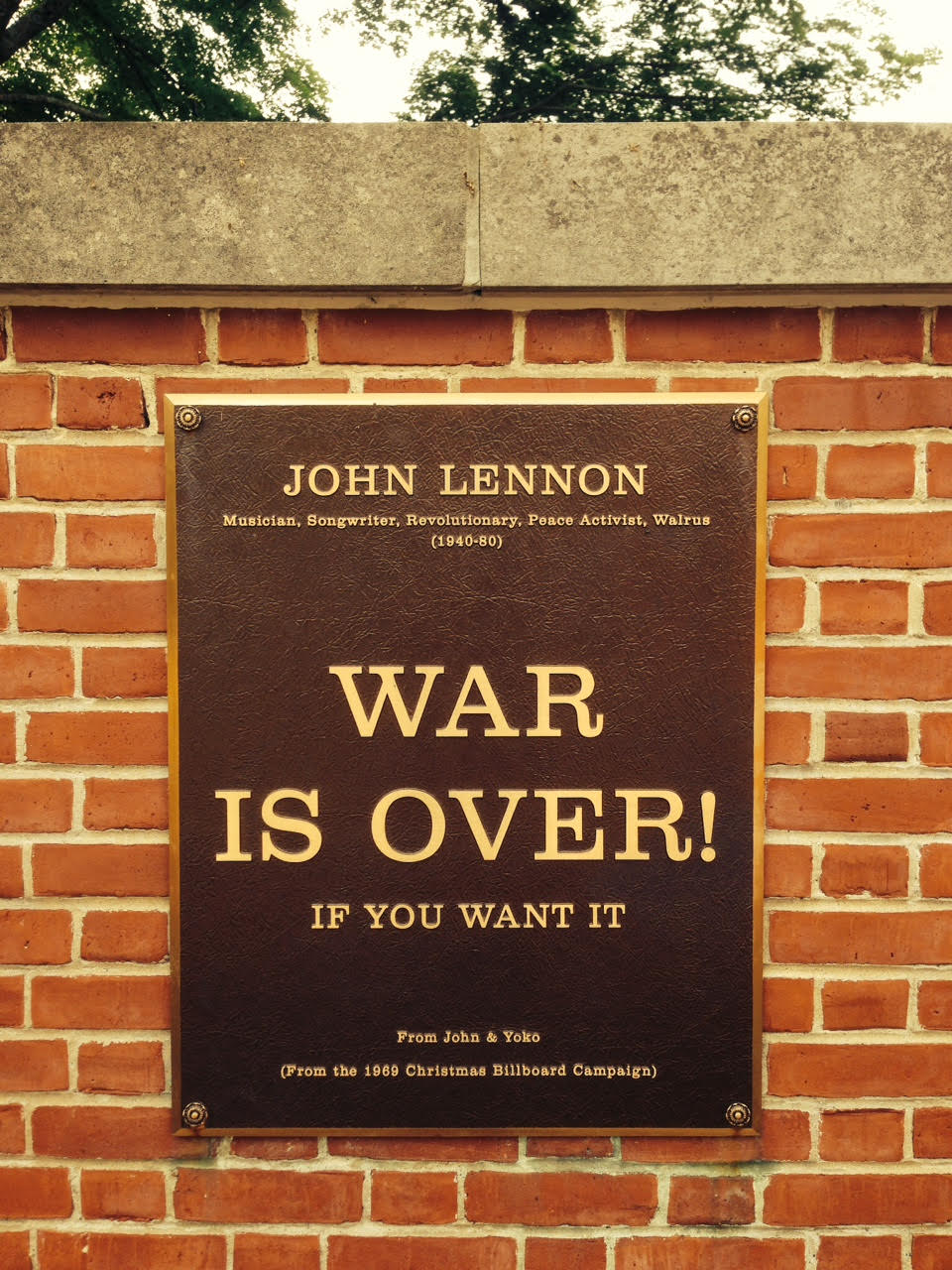
REMEMBER TO BE KIND
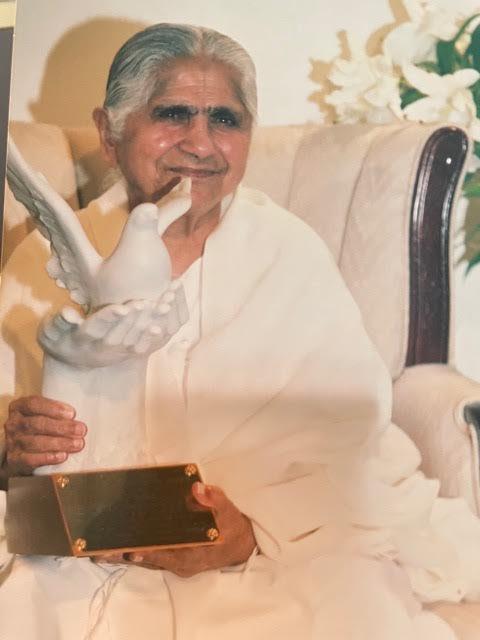
Dadi Janki receives Courage of Conscience Award in Cambridge 2005.