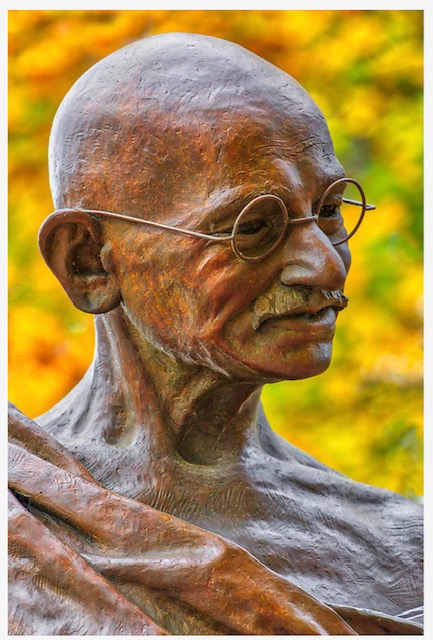
.The statue of Mahatma Gandhi was sculpted by internationally renowned artist Lado Goudjabidze who immigrated to the U.S. from the Republic of Georgia in 1977. He presently lives in Los Angeles, California where he continues to receive commissions from the Peace Abbey Foundation.
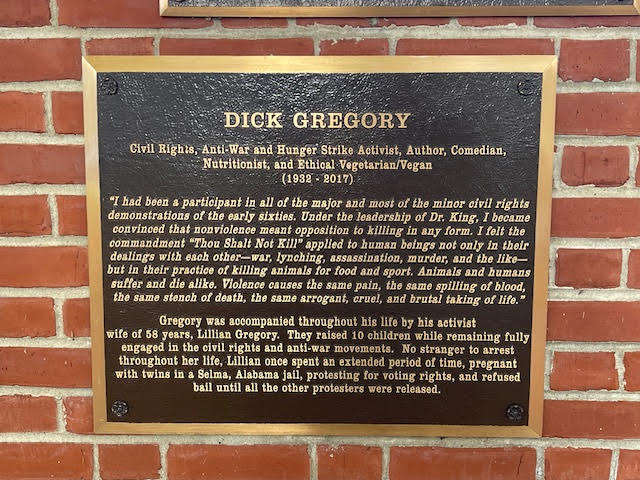
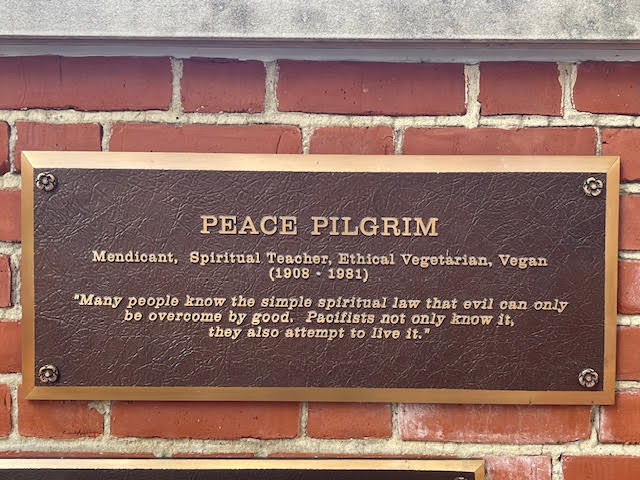
THE PACIFIST MEMORIAL
Short video of August 1st, 2021 Installation Ceremony
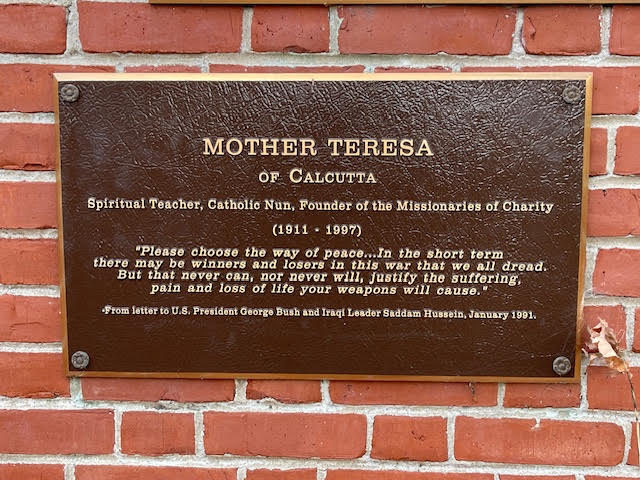
The Pacifist Memorial honors individuals throughout history who have demonstrated the capacity and willingness to employ nonviolent means to resolve differences and to promote social justice, often at a great personal sacrifice.
Pacifists hold that killing is inherently immoral and that disputes must be settled through peaceful means. They strive to avoid hateful thoughts, words, and deeds and refuse to use violence to resolve conflict, believing that it is better to absorb violence than to inflict it.
One central goal of pacifism is to bring an end to war, to the manufacture and distribution of the weapons of war, and to promote ways of resolving differences that prevent war. Many pacifists have been conscientious objectors who refuse to participate in war and the institutions that promote war. Increasingly, many embrace a vegan lifestyle which is considered the most compassionate form of pacifism.
Many of the pacifists honored at the Pacifist Memorial represent the highest ethical traditions of the world religions represented here. Others derive their pacifism from secular humanist traditions of nonviolence and peacemaking.
May the examples of the lives of the pacifists honored here inspire us to increase our efforts to promote peaceful conflict resolution in our communities and among nations.
AD HOC COMMITTEE FOR REVIEW OF NOMINEES FOR PLACEMENT
AT PEACE MEMORIAL PARK
Given the mission and spirit of the Pacifist Memorial, three important criteria for determining whether an individual should be honored are:
1. Commitment to Nonviolence and Peace
Did the individual demonstrate a clear and sustained commitment to nonviolence as a principle or way of life? This may include:
• Advocacy for peaceful conflict resolution.
• Opposition to war, violence, or oppression.
• Promotion of reconciliation, understanding, and human dignity.
2. Courageous Action and Personal Sacrifice
Did the individual act on their convictions despite personal risk, hardship, criticism, or sacrifice? This may include:
• Standing up for justice in the face of opposition.
• Accepting personal, professional, or physical consequences for peaceful principles.
• Demonstrating moral courage rather than simply expressing beliefs.
3. Lasting Positive Impact on Society
Did the individual’s actions leave a meaningful legacy that advances peace, justice, human rights, or compassion? This may include:
• Inspiring others through example.
• Creating social, educational, humanitarian, or civil rights change.
• Leaving lessons that continue to benefit future generations.
Individuals honored at the Pacifist Memorial should have demonstrated a profound commitment to nonviolence, shown exceptional moral courage in advancing peaceful principles, and left a lasting legacy that promotes peace, justice, and human dignity for future generations.
These three areas focus not merely on beliefs, but on the combination of principle, action, and enduring impact.
Join Our Mailing List

The Mission Continues!
REMEMBER TO BE KIND