University of Massachusetts Boston Archives
Profile of Peace Abbey Founder
Lewis Randa’s lifelong commitment to pacifism and nonviolence was deeply shaped by the teachings of Mahatma Gandhi and the example of conscientious objection set by Muhammad Ali. Gandhi’s philosophy of nonviolent resistance, rooted in truth, compassion, and the transformation of society through peaceful means, became a cornerstone in Randa’s approach to activism and education. Gandhi’s belief that nonviolence is both a personal ethic and a collective strategy inspired Randa to found institutions like the Life Experience School and the Peace Abbey, where the mission was not only to protest war but to cultivate a “culture of peace” in everyday life. The Pacifist Memorial, which Randa established, features a nine-foot statue of Gandhi at its center, symbolizing Gandhi’s central role in shaping the Abbey’s vision and Randa’s own identity as a conscientious objector and peacemaker.
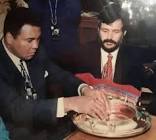
Muhammad Ali’s public refusal to be drafted during the Vietnam War, grounded in his religious and moral beliefs, served as a powerful, contemporary model of conscientious objection. Ali’s willingness to risk his career and freedom rather than compromise his convictions resonated deeply with Randa, who himself was discharged from the military as a conscientious objector during the same era. Ali’s Supreme Court victory affirmed the legitimacy of conscientious objection as an act of moral courage and civil disobedience, reinforcing for Randa that standing against war and violence is a form of “love, sanity, and being human”. These influences led Randa to:
•Embrace conscientious objection as a “blueprint for living your life,” not just as a protest but as a lifelong commitment to nonviolence in all forms.
•Create educational and memorial spaces that honor peacemakers, like Gandhi and Ali, who exemplified the courage to say no to violence.
•Encourage others, especially those with disabilities, to see themselves as instruments of peace, echoing Gandhi’s and Ali’s teachings about the power of individual conscience and moral action.
Gandhi’s teachings provided Randa with the philosophical foundation for nonviolent living, while Muhammad Ali’s example offered a contemporary, courageous model of conscientious objection, both profoundly shaping Randa’s activism, educational philosophy, and the mission of the Peace Abbey.
At the heart of Randa’s journey lie both the teachings and example of Robert F. Kennedy, whose campaign he joined as a college student at the University of Iowa, and the enduring influence of Martin Luther King Jr.’s embrace of Mahatma Gandhi’s philosophy of nonviolence. Together, these guiding forces have shaped the civil rights and peace movements and have informed the focus and spirit of Lewis Randa’s commitment to advancing a more just, nonviolent, and peaceful world through the power of nonviolence and self-sacrifice.
Central to this lifelong commitment is also Randa’s consistent effort to broaden the circle of compassion to embrace all sentient beings. While many influences helped shape his thinking on animal rights, it was the teachings and personal example of Dr. Michael Klaper that established a guiding principle of veganism, one that became the heartbeat of his dedication to nonviolence and pacifism.
THE LIFE EXPERIENCE SCHOOL (est.1972)
& THE PEACE ABBEY (est. 1988)
After concluding its state contracted educational programming in 2024, The Life Experience School shifted its focus toward coordinating peace-related activities within special education schools and developing national-level initiatives. Building on more than 50 years of experience in educating individuals with special needs, it now seeks to inspire students to see themselves as instruments of peace, while creating and sharing programs on peacemaking within both public and private schools nationwide.
OVERVIEW
What an experience this has been for The Life Experience School which over a half-century ago embarked upon an extraordinary peacemaking mission that took on greater meaning following the passing of a young student named Norman Nylund who lost his battle with cancer. Norman saw the world through the lens of autism which heightened his appreciation of animals and nature, textures, and sounds. As we spent time with him, we grew to appreciate the beauty, joy and love his world offered him, and through him, all of us at the Life Experience School. Sharing the same birthday as St. Francis of Assisi, the patron saint of animals and the environment, it was decided that upon his passing in 1986, a portion of Norman’s cremation remains would be scattered at the cloistered garden of San Damiano in Assisi, Italy. Norman and St. Francis shared something quite profound which would shape the philosophy of the school, its mission, and its peacemaking programs into the next century.
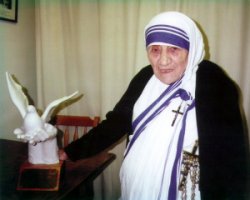 My trip to Assisi with his ashes happened to coincide with the UN International Day of Prayer for Peace. Upon my return to the School, I shared the prayers with our students who found special meaning in their recitation and began, as a school project, sharing them through what they called Peace Seeds. Then on June 4, 1988, the 20th anniversary of Bobby Kennedy’s assassination, (the School is dedicated to RFK), Mother Teresa visited the Life Experience School in support of our peace work and the rest is history.
The contents of the library and many of the extraordinary holdings of the Peace Abbey have been donated to Harvard Divinity School, BU School of Theology, Dartmouth College, UMASS Boston, Greyhound Friends, Holy Family Church, St. Mary’s Church and numerous other schools and centers around the Boston area.
We have so many people to thank, especially Dot Walsh who gave so much of herself to the Peace Abbey, and volunteers Dan Dick, Madeline Champagne, Brian Cron, Leo Waters and many others. We are so grateful to all those who cared for the Guesthouse and our visitors from around the world, maintained and help operate the Conference Center, fed and cared for the animals in sanctuary, and all those who supported the Peace Abbey and Life Experience School, without ever being asked.
It is important to note that the memorial walls and plaques at the Pacifist Memorial, the Emily statue and plaques at the Sacred Cow Animal Rights Memorial, and the Conscientious Objector Cremation Cemetery will continue to be owned and cared for by the Peace Abbey Foundation and The Life Experience School as restrictions are in place for it to remain in perpetuity.
View rapid flashback Archival music video of The Peace Abbey by Joan Hill.
Peace,
Lewis M. Randa
Interview about the Life Experience School.
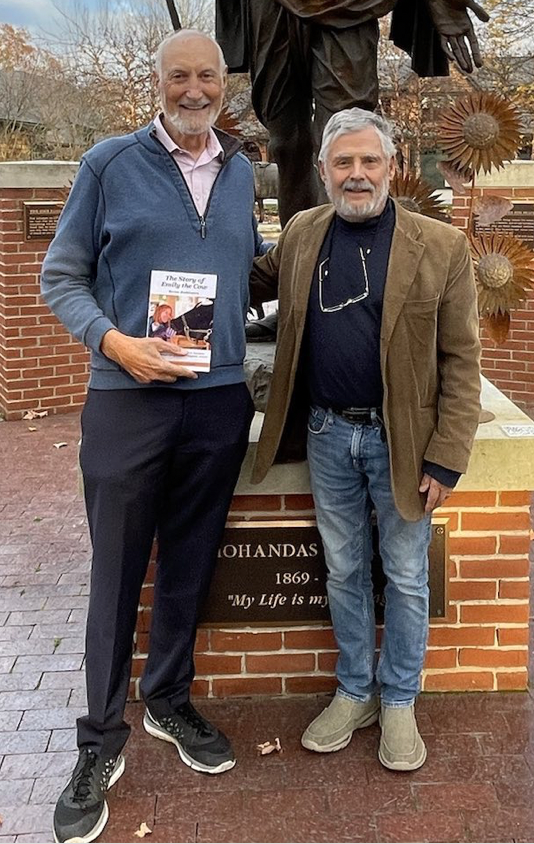
The Mission Continues!
Join Our Mailing List

The Mission Continues!
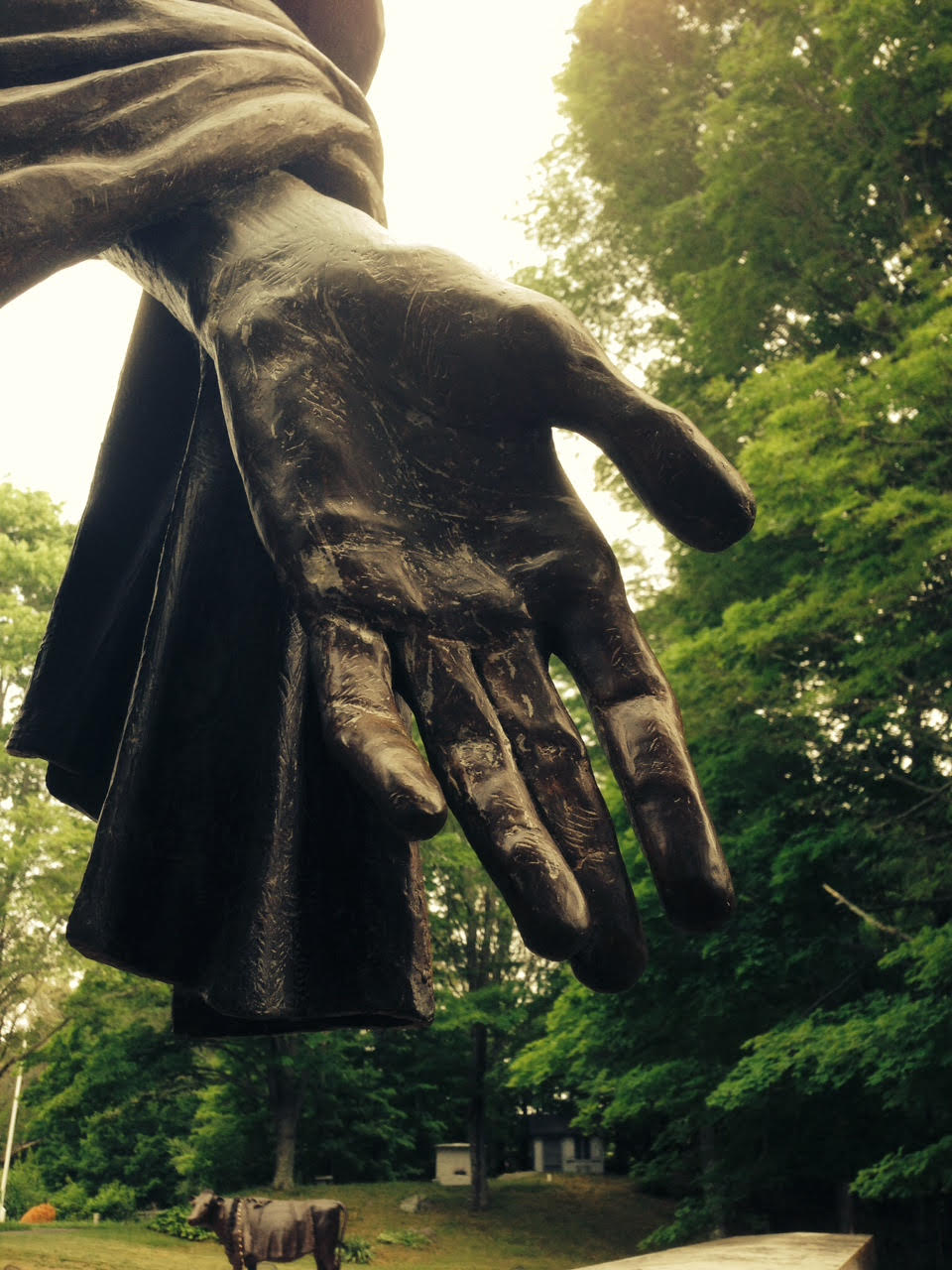
REMEMBER TO BE KIND
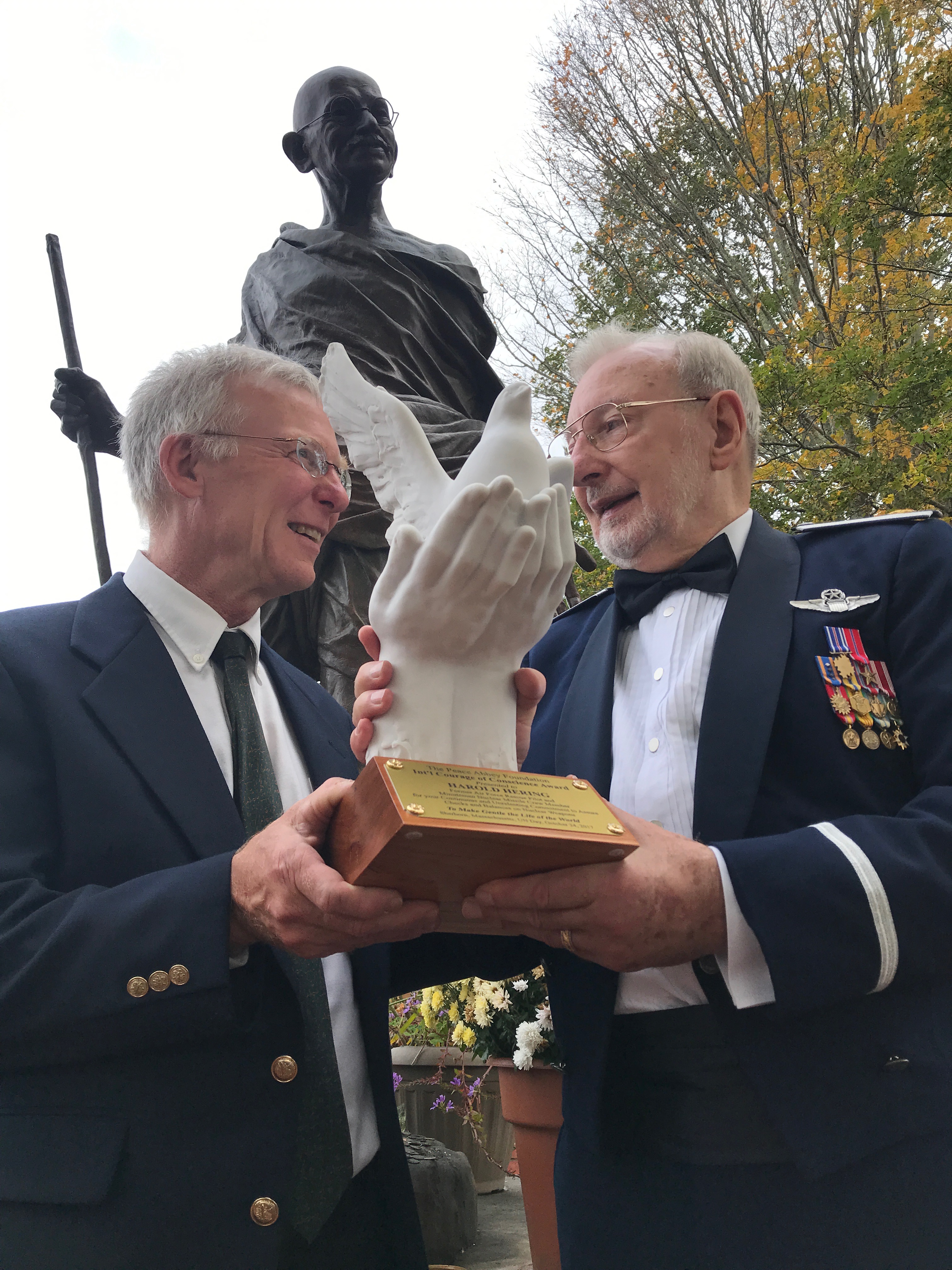
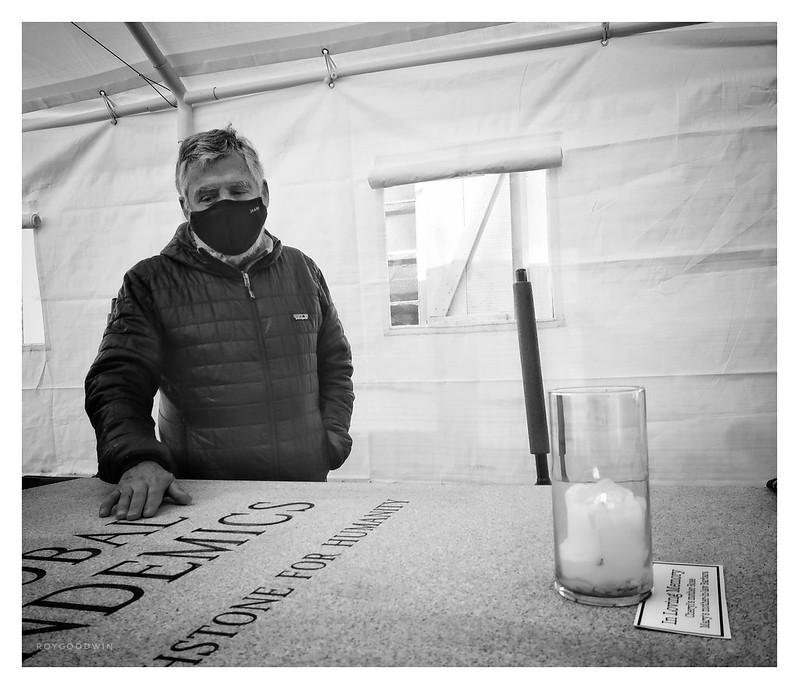
HAROLD L. HERING RECEIVES COURAGE OF CONSCIENCE AWARD FROM KARL SCHLOTTERBECK, CO-CHAIR OF STONEWALK